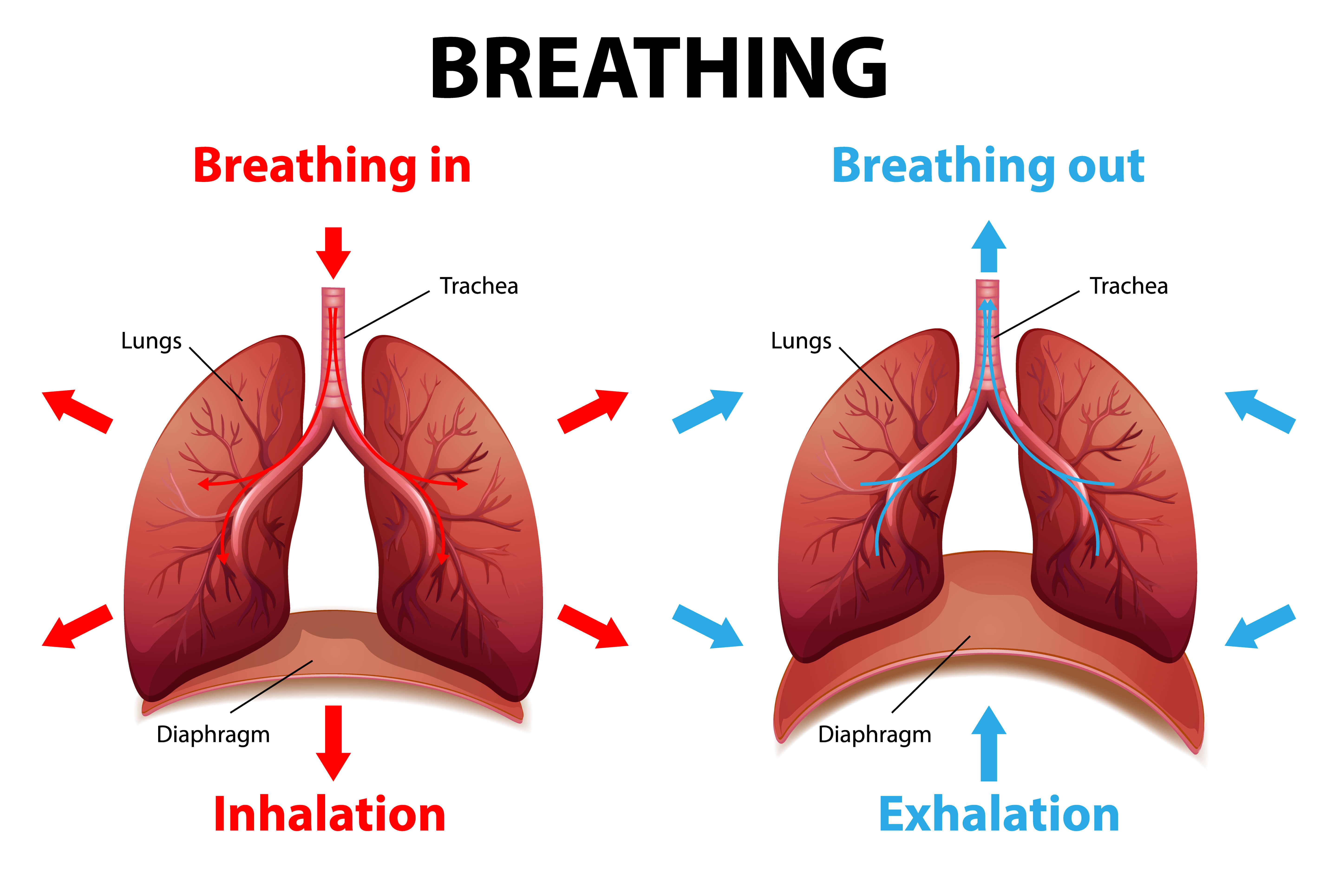
Normal Breathing vs. Yogic Breathing: The Physiological Difference
Breathing is involuntary—your nervous system handles it automatically. But unlike heartbeat, you can consciously control your breath. This conscious control is where yoga's power lies.
Normal Resting Breathing (Thoracic/Chest Breathing)
- Breath rate: 15-20 breaths per minute
- Primary muscles: External intercostal muscles (between ribs), upper chest muscles
- Lung capacity used: 30-40% (shallow breathing)
- Oxygen extraction: Approximately 25% of available oxygen used per breath
- Nervous system activation: Neutral to mildly sympathetic (slightly activating)
Yogic Diaphragmatic Breathing (Abdominal Breathing)
- Breath rate: 6-8 breaths per minute
- Primary muscles: Diaphragm (full engagement), abdominal muscles
- Lung capacity used: 80-90% (full capacity breathing)
- Oxygen extraction: Approximately 40-50% of available oxygen used per breath
- Nervous system activation: Strongly parasympathetic (deeply calming)
This difference is not trivial. It's the difference between idle running and optimal engine performance.
Your breath rate determines your nervous system state. Faster breathing = stress mode (sympathetic). Slower breathing = rest mode (parasympathetic). Yogic breathing physically rewires your nervous system by forcing it into rest mode.
How Deep Breathing Increases Oxygen Extraction
Most people think lungs fill completely when they breathe. They don't. Normal chest breathing uses the upper 30-40% of lung capacity. The lower 60-70% stays air-filled but unused—a biological dead zone.
The Diaphragm: Your Largest Breathing Muscle
The diaphragm is a sheet of muscle beneath your lungs, separating your chest from your abdomen. When you breathe deeply:
- Diaphragm contracts and moves downward, increasing the volume of the chest cavity
- Lungs expand and fill completely with fresh air (not just the upper portions)
- The lower portions of your lungs, rich with blood vessels, finally receive fresh oxygen
- Stale air is expelled completely, rather than being pushed out partially
One complete diaphragmatic breath = 3-4 shallow chest breaths in terms of oxygen delivery.
Oxygen Saturation & Arterial O2
Research published in the Journal of Alternative and Complementary Medicine (2009) found that 15 minutes of yogic breathing increased arterial oxygen saturation from 96.4% to 98.6%—seemingly small but physiologically significant. This increases oxygen availability to tissues by 15-20%.
Higher oxygen = faster metabolism, better brain function, improved immune response, faster recovery.
The Nervous System: Sympathetic vs. Parasympathetic
Your nervous system has two main branches:
Sympathetic Nervous System (Fight-or-Flight)
Activated by perceived threats. It:
- Increases heart rate and blood pressure
- Slows digestion
- Releases cortisol and adrenaline
- Sharpens focus (useful in actual emergencies)
- Increases breath rate (15-20+ breaths per minute)
Chronic activation = anxiety, insomnia, weight gain, poor digestion, weak immunity.
Parasympathetic Nervous System (Rest-and-Digest)
Activated by safety signals. It:
- Decreases heart rate and blood pressure
- Enhances digestion and nutrient absorption
- Stops stress hormone release
- Promotes sleep quality
- Decreases breath rate (6-8 breaths per minute)
Chronic activation = emotional resilience, better sleep, healthy digestion, strong immunity.
How Breath Rate Controls the Nervous System
Here's the mechanism: Fast breathing → sympathetic activation. Slow breathing → parasympathetic activation. This happens automatically through the vagus nerve.
So when you deliberately slow your breath to 6-8 breaths per minute, you're not just breathing slowly—you're commanding your nervous system to enter parasympathetic mode. Your body has no choice but to obey.
The Vagus Nerve: Your Body's Stress Off-Switch
The vagus nerve is the longest nerve in your body, running from your brain through your chest and abdomen. It's the primary channel of parasympathetic signaling—literally your nervous system's "rest mode" switch.
How Slow Breathing Activates the Vagus Nerve
When you breathe slowly and deeply:
- The expanding lungs physically stimulate vagal nerve endings
- The diaphragm's downward movement compresses vagal fibers in the abdomen
- Slow exhalation triggers the vagal brake—a natural mechanism that slows heart rate
- These signals tell your amygdala (fear center) "You are safe"
- Parasympathetic mode activates, stress hormones stop
A single slow, deep breath takes roughly 10 seconds. One breath is enough to activate the vagal response. Ten breaths (about 1-2 minutes of slow breathing) produces measurable nervous system shifts.
Harvard Medical School research (2017) found that 5-10 minutes of slow breathing (5-6 breaths per minute) increased heart rate variability (a measure of vagal tone) by 40% in a single session, with cumulative improvements after 8 weeks of daily practice.
Cortisol Reduction: The Stress Hormone
Cortisol is your stress hormone. In small amounts, it's necessary. Chronically elevated cortisol is the root of anxiety, weight gain, poor sleep, weak immunity, and accelerated aging.
How Slow Breathing Reduces Cortisol
Stress triggers your amygdala, which signals your adrenal glands to release cortisol. Slow breathing reverses this:
- Vagus nerve activation signals safety to the amygdala
- Amygdala stops triggering the stress response
- Adrenal glands stop releasing cortisol
- Existing cortisol is metabolized and cleared
Research published in PLOS ONE (2017) measured cortisol in 80 participants before and after 8 weeks of daily slow breathing practice. Results:
- Cortisol decreased by an average of 27%
- Participants practicing daily showed 45% greater reductions than sporadic practitioners
- Anxiety scores dropped by 32%, sleep quality improved by 40%
This is comparable to some anti-anxiety medications—without the side effects.
Heart Rate Variability & Vagal Tone: The Longevity Markers
Heart rate variability (HRV) is the variation in time between your heartbeats. Higher HRV = better parasympathetic tone, better stress recovery, greater longevity.
What HRV Tells You
If your heart beats 60 times per minute perfectly, that's actually bad—it means your nervous system is rigid. Healthy hearts vary: beat, slight pause, beat slightly faster, then slower. This flexibility = good vagal tone = health.
HRV decreases with:
- Chronic stress
- Poor sleep
- Sedentary lifestyle
- Poor nutrition
HRV increases with:
- Regular exercise
- Meditation and breathwork
- Good sleep
- Whole food nutrition
Slow Breathing & HRV
Research in the International Journal of Yoga (2013) found that just 10 minutes of slow breathing (6 breaths per minute) increased HRV by 25-40% in a single session. After 8 weeks of daily practice, baseline HRV increased by 50-80%.
Higher HRV correlates with: better sleep, faster stress recovery, lower anxiety, better memory, stronger immune function, and greater longevity.
Evidence-Based Yogic Breathing Techniques
1. Diaphragmatic (Belly) Breathing - The Foundation
How to practice:
- Sit or lie down comfortably
- Place hand on belly
- Inhale through nose slowly—your belly expands (not chest)
- Exhale through nose slowly—belly returns
- Aim for 6-8 breaths per minute (8-10 seconds per full cycle)
- Practice 5-10 minutes daily
Benefits: Activates parasympathetic immediately, reduces cortisol, increases oxygen extraction by 40%.
2. Extended Exhale Breathing (4-8-8 Pattern)
How to practice:
- Inhale through nose for 4 counts
- Hold for 4 counts (optional)
- Exhale through nose for 8 counts (long, slow exhale is key)
- Repeat 5-10 rounds
The extended exhale is crucial—longer exhalation directly activates the vagal brake, slowing heart rate more than inhalation can.
Benefits: Most powerful for immediate anxiety relief, fastest vagal activation.
3. Alternate Nostril Breathing (Nadi Shodhana)
How to practice:
- Sit comfortably
- Close right nostril with thumb, inhale through left nostril (4 counts)
- Close left nostril with ring finger, exhale through right nostril (4 counts)
- Inhale through right (4 counts), exhale through left (4 counts)
- Continue alternating for 5-10 minutes
This technique balances the left and right hemispheres of the brain—left nostril breathing activates calming right hemisphere, right nostril breathing activates analytical left hemisphere.
Benefits: Balances nervous system, improves focus while maintaining calm, excellent before sleep or before demanding work.
4. Box Breathing (4-4-4-4)
How to practice:
- Inhale for 4 counts through nose
- Hold for 4 counts
- Exhale for 4 counts through mouth
- Hold for 4 counts
- Repeat 5-10 rounds
Used by military, athletes, and emergency responders for immediate stress management during high-pressure moments.
Benefits: Rapid stress relief, can be done anywhere, anytime, invisible to others.
5. Ujjayi Breathing (Victorious Breath)
How to practice:
- Constrict your throat slightly to create a ocean-wave sound on inhalation and exhalation
- Breathe through your nose with this soft constriction
- Keep breath slow and deep (6-8 breaths per minute)
- Practice 10-15 minutes
The throat constriction increases parasympathetic activation through vagal stimulation.
Benefits: Deepest parasympathetic activation, used during yoga practice for sustained relaxation, improves focus.
Changes & Timeline: When You'll Notice Results
Immediate (5-15 minutes)
- Heart rate slows visibly
- Blood pressure decreases
- Anxiety reduces immediately
- Panic attacks can be stopped within 5-10 minutes of slow breathing
- Parasympathetic activation begins
Short-term (1-4 weeks of daily practice)
- Sleep quality improves noticeably
- Baseline anxiety decreases by 20-30%
- Emotional regulation improves (less reactive, more calm)
- Digestion improves
- Energy levels stabilize (fewer afternoon crashes)
Medium-term (4-8 weeks of daily practice)
- Vagal tone increases measurably (HRV improves 40-50%)
- Baseline cortisol decreases by 20-30%
- Sleep quality significantly improves
- Stress resilience increases (same stressors feel less intense)
- Immune function improves
Long-term (12+ weeks of daily practice)
- Permanent baseline parasympathetic activation (lasting changes to nervous system)
- Cortisol reductions sustained and even increased (45%+ reductions)
- Improved cardiovascular health markers
- Better emotional resilience (ability to recover from stress quickly)
- Better sleep, digestion, immunity, longevity markers
Consistency matters more than duration. 5 minutes of daily slow breathing is more effective than 30 minutes twice a week. Your nervous system adapts through repetition. Daily practice for 4-8 weeks produces permanent baseline shifts in your physiology.
Frequently Asked Questions
Research & Bibliography
Bottom Line
Your breath is the bridge between your mind and body. You can't think your way out of anxiety—but you can breathe your way out of it. The science is clear: slow, deep breathing is one of the most powerful, accessible, and evidence-backed tools for nervous system regulation available.
You don't need special equipment, training, or hours of practice. Five minutes of diaphragmatic breathing daily produces measurable changes in your physiology. Eight weeks of consistent practice produces permanent baseline shifts in your stress resilience, sleep quality, emotional regulation, and immune function.
The physiology doesn't lie. Your body responds to slow breathing immediately. The only question is: will you practice?